

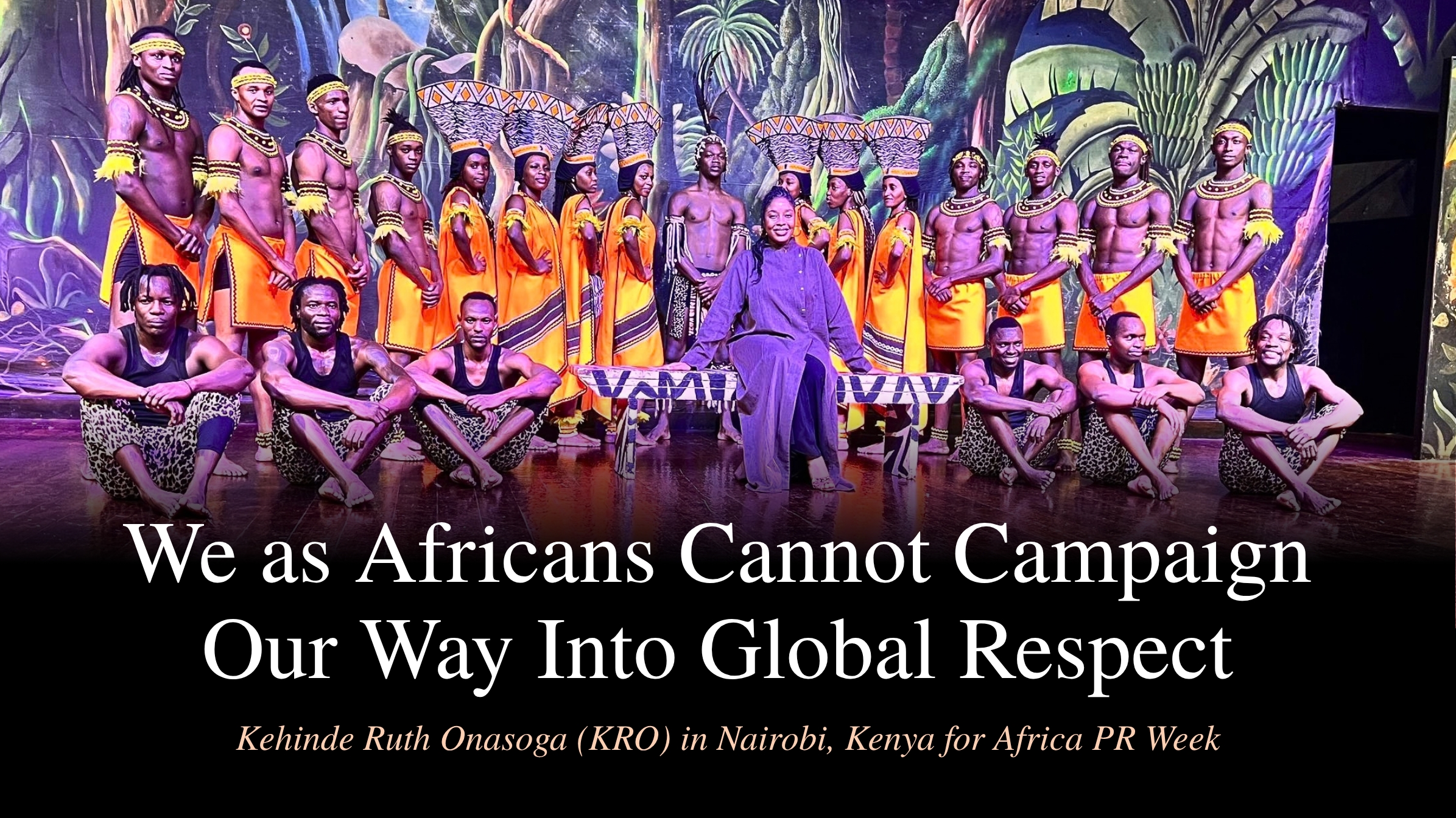
Jambo!
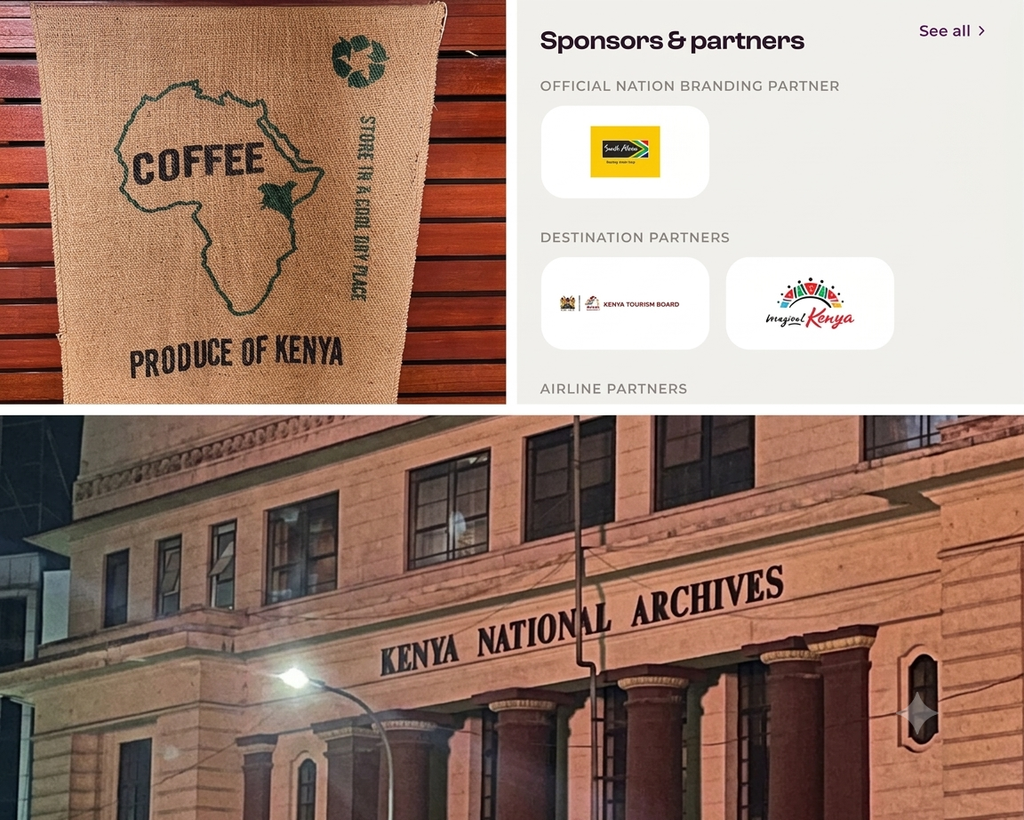
It was my first time in Kenya, and being in Nairobi for Africa PR Week 2026 felt a lot less like attending a conference and more like being a part of a necessary conversation, one that Africa has been circling for years but is now ready to confront directly.
What a time to be alive!
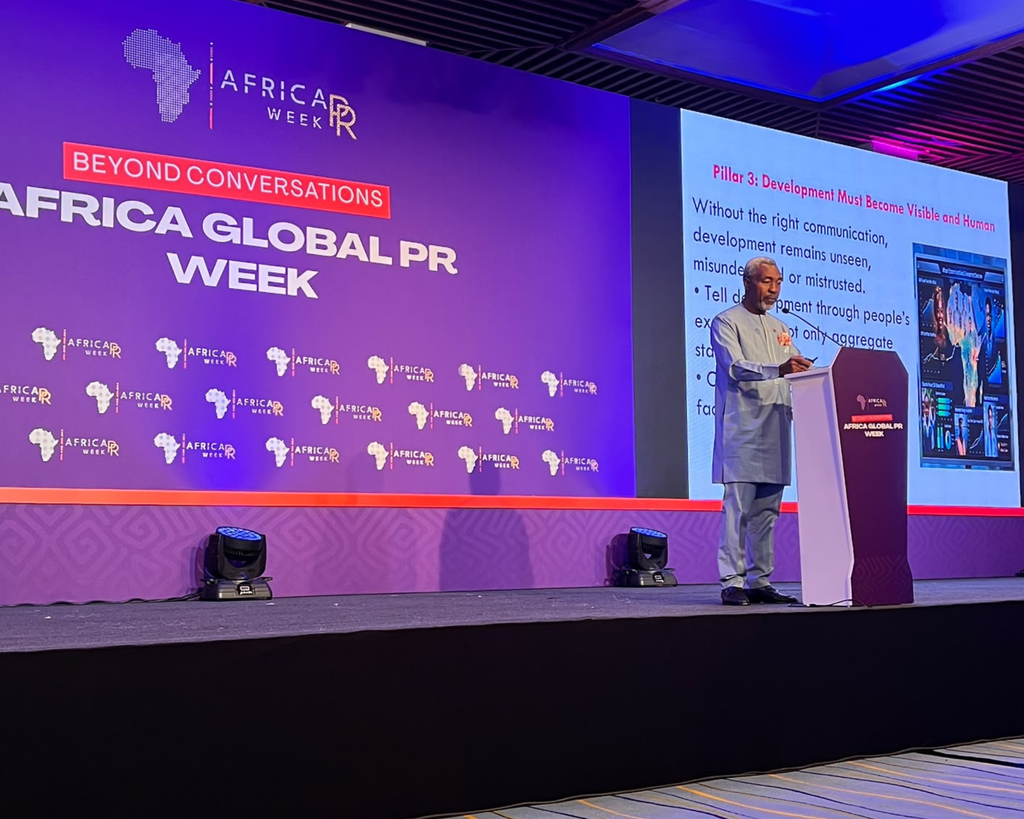
While we gathered to talk about perception, positioning and branding. It quickly became clear that this was not going to be just another conversation about campaigns or communication frameworks. The conversations in the room and outside at the buffet tables echoed the same sentiment, which was how African nations are seen, how they are experienced, and ultimately, how they are valued from an external perspective.
This conversation then brought about the uncomfortable question we’ve tiptoed around in so many ways, but alas, one that is quite impossible to ignore.
Why do some African countries command global respect and trust, while others, despite consistent effort through lobbying and other avenues, still find themselves trying to negotiate their way into it?
It is important to know this: visibility has absolutely nothing to do with it, and it has not been for a while.
Let’s begin with what Perception is: this is the meaning people assign to what they see, hear, and experience. And to build a lasting Perception, it has to be one rooted in credibility and consistency.
Whether a country can truly deliver on its promise is not tested in policy documents or campaign headlines by its sponsorship of a foreign football team.
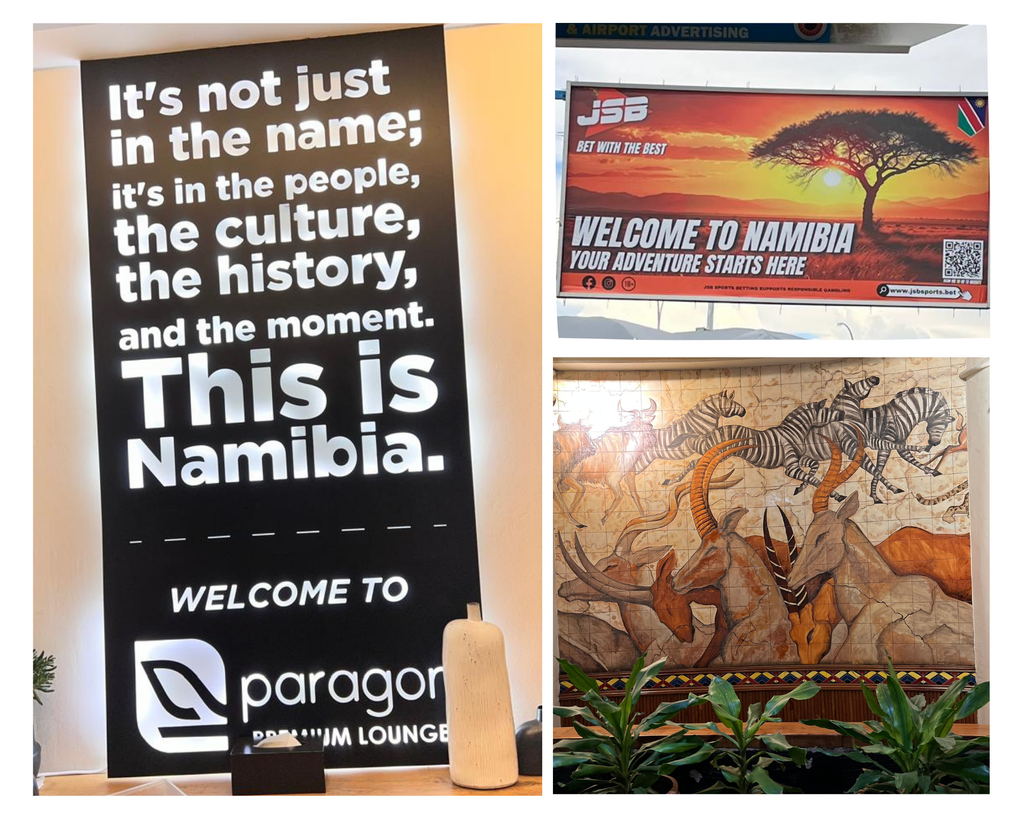
It is felt the moment you arrive. It is in the ease (or chaos) of landing at Murtala Muhammed Airport in Nigeria, where your first interaction begins to shape what efficiency means in that context. In Accra, Ghana, where the energy of the Year of Return still lingers months after the end-of-year rush for African Americans trying to find their identity beyond what a bot can share, lies the seamless blend of culture and commerce that makes you feel both welcomed and economically engaged. It is in the quiet order of Windhoek, Namibia, where structure and calm subtly reinforce a nation that works as it presents itself through subtle colonial rule.
I have been to these countries, and yes, the perceptions they enforce are not ideas, but the experience.
For a long time, we have leaned heavily on storytelling, not from our point of view but from the outside in. And this is not to say storytelling does not matter, because it does. It helps shape memory, influences belief, and gives identity to people and places. But what became evident in Nairobi is that Africa does not have a storytelling problem. What we have is a systems problem.
Because no matter how compelling the narrative is, you cannot advertise your way into trust.
Countries that are taken seriously globally are not necessarily louder. They are more aligned. Their policies, infrastructure, communication, and citizen experience work together in a way that makes their positioning believable.
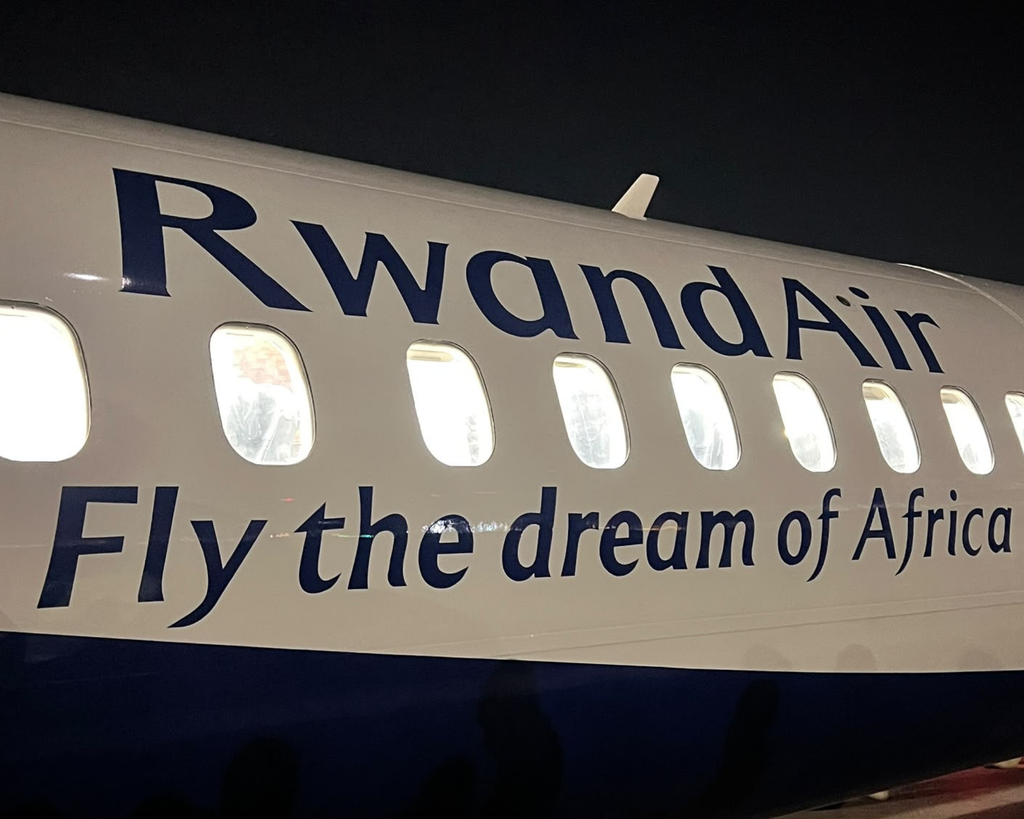
You see this clearly when you look at Rwanda. What the world recognises today is not the result of a well-funded campaign alone.
The “Visit Rwanda” initiative gained global visibility through high-profile partnerships, but its real strength lies beneath the surface in the coordination between policy, tourism development, infrastructure, and how the country manages itself internally. And the numbers tell the story better than any campaign ever could.
Rwanda generated over $685 million in tourism revenue in 2025, driven by nearly 1.5 million visitors, with consistent year-on-year growth and a strong positioning as both a leisure and business destination. Even more telling is the structure behind that growth: conference tourism alone contributed close to $95 million, reinforcing the country’s deliberate positioning as a hub for global events.
The experience of Rwanda, for many visitors, is consistent with what has been communicated. And that consistency, between promise, delivery, and measurable economic value, is what builds trust.
Ghana offers a different, but equally clear example. The Year of Return was not simply a campaign directed at the diaspora; it was a structured alignment of history, identity and economic opportunity.
It drew people in emotionally, but it also created tangible value across sectors, from tourism to real estate to culture. Ghana recorded approximately 1.5 million visitors and generated close to $1.9 billion in tourism revenue, with arrivals increasing by as much as 45% during the period.
But what is most important is that the momentum did not fade; it reset the course of the country’s tourism economy, which has since grown to generate over $4.3 billion in 2025, supported by more than 1.3 million international arrivals. By simply structuring its nation’s branding.
We see clearly, with the examples given, that Perception is earned through alignment between what is promised, what is experienced, and the value that is ultimately delivered.
We see countries on the continent that are no longer trying to convince the world of anything. They are simply executing at a level where positive perception becomes inevitable. And in many of these cases, one thing stands out: the citizen is not separate from the brand. The citizen is the brand.
This raises the next important question
How does a nation get its people to carry its identity in a way that is consistent, believable and powerful?
It does not happen by chance. It is designed.
First, participation is engineered. Deliberately so. People do not adopt a national identity because they are told to. They do so when systems make participation natural, even unavoidable. In environments where governance, policy and public experience are aligned, citizens do not struggle to “represent” their country. They simply live within a system that reflects a clear identity.
Second, there must be economic inclusion. People promote what benefits them. When citizens can directly or indirectly see how the nation’s positioning translates into opportunity, jobs, business growth, and increased income, they begin to reinforce that positioning themselves. This is why initiatives like Rwanda’s tourism revenue-sharing model or Ghana’s diaspora-driven economic push gain traction internally. The brand is no longer abstract; it becomes personal.
Then comes behavioural consistency. Trust is built when experiences are predictable. When systems are enforced, when standards are clear, when there is a level of discipline in how things work, the gap between expectation and reality begins to close. And once that gap closes consistently, perception stabilises. People know what to expect, and more importantly, they get it.
Finally, there is emotional ownership. This is often overlooked, but it is critical. When people feel connected to their country, when they are proud of it, when they believe in its direction, they defend it. Ghana’s positioning of the Year of Return as a homecoming rather than a campaign tapped into something deeper than tourism. It activated identity. And once identity is activated, advocacy follows naturally.
What becomes clear through all of this is that nation branding, much like organisational branding, does not start externally. It starts from within. The narrative must be understood internally, lived daily, and reinforced through systems. Only then does external communication become credible.
Africa is not lacking in stories. If anything, we have an abundance of them, rich, diverse, and powerful. What we lack, at scale, are the aligned systems that make those stories believable beyond our borders.
Because in the end, a country’s brand is not what it says. It is what the world consistently experiences, through its people, its systems, and its delivery.
Until perception is backed by performance, branding will remain noise. And the Africa we speak about so passionately will remain an idea, close, visible, but just out of reach.
The shift we need is not another campaign. It is execution.
Leave a Reply